

The Future of Surfing Is Here - and He’s Filipino American | Meet Titus Santucci, the First FilAm on the USA Junior National Surf Team
Exclusive Interview
By Jennifer Redondo
What if your mom didn’t just support your passion, but actually pushed you to chase it, even if it meant taking a non-traditional path in school? For Titus Santucci, that’s exactly what happened. Instead of giving up on education, he balanced online classes, a post-pandemic norm, with hours in the ocean honing his craft. The payoff? He’s not only carving waves, he’s carving history.
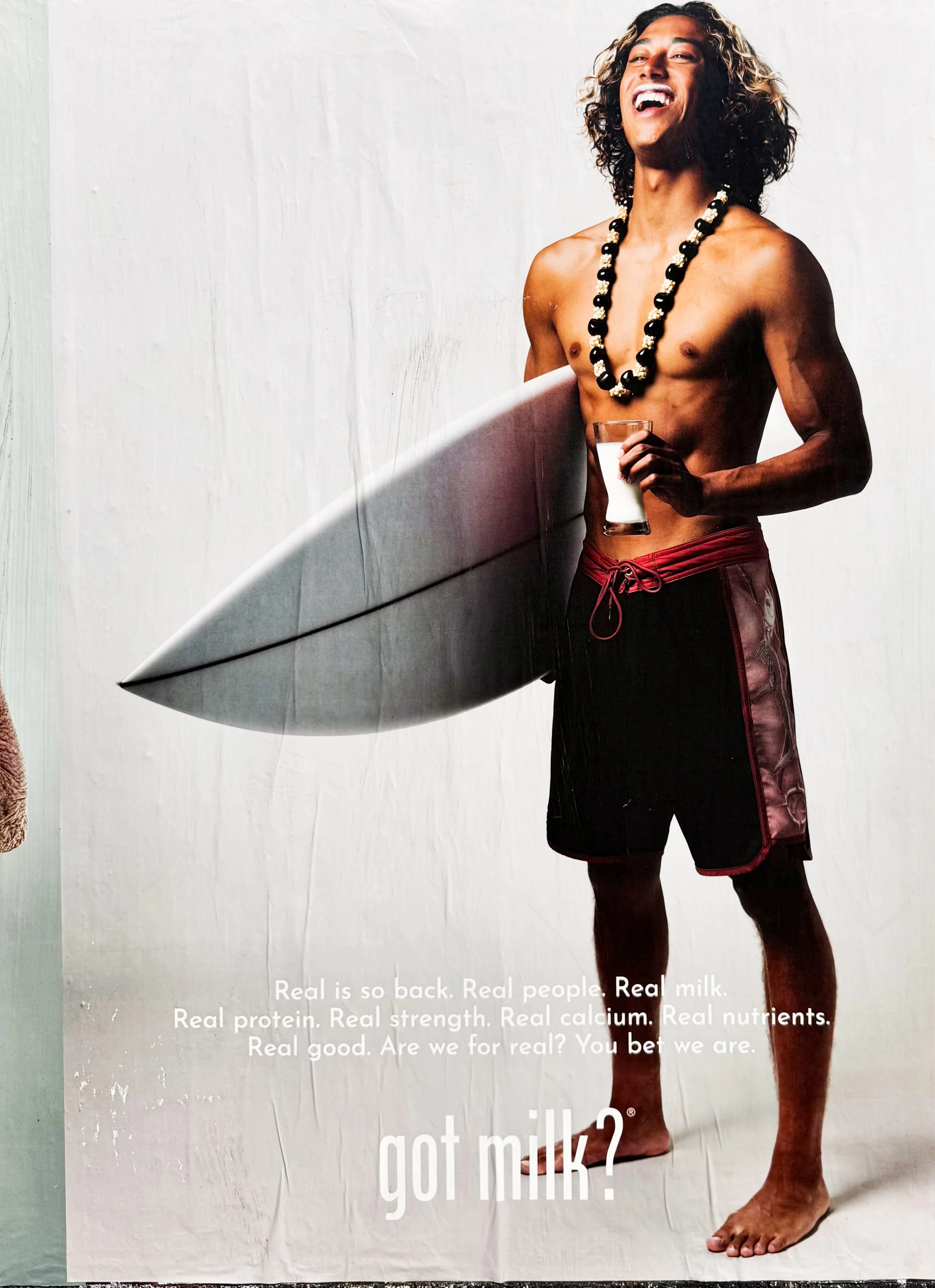
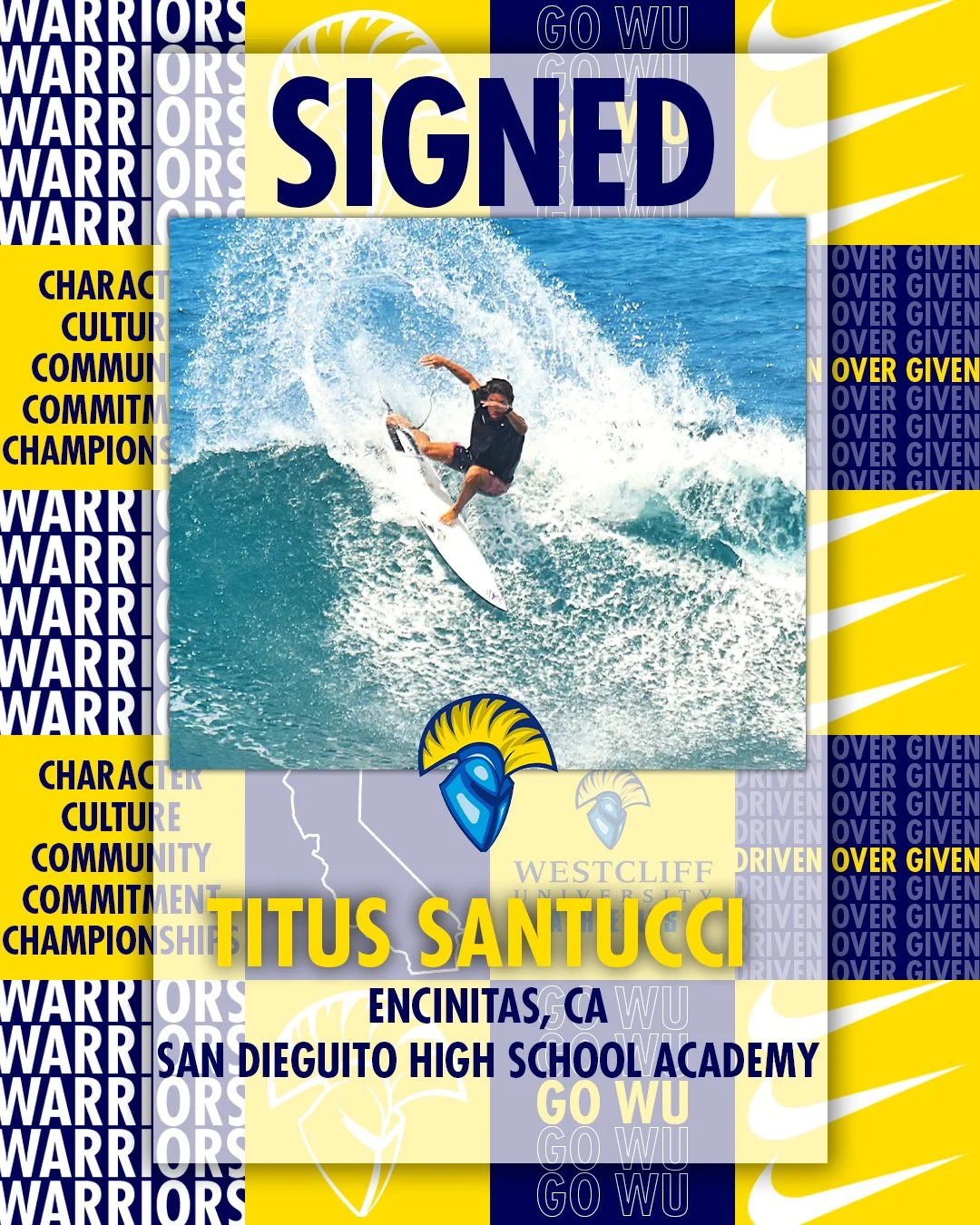
Titus is the first Filipino American male surfer to join the U.S.A. Junior National Surf Team and the first to earn a surfing scholarship at Westcliff University, all while training to go pro. And chances are, you’ve already spotted him: either catching waves, starring in the latest Got Milk? campaign, or being featured in Netflix’s docuseries 1 in 7,641.
We sat down with Titus to talk about his journey, his roots, and what it means to break barriers in a sport where representation is rare.

Photos Courtesy of Titus Santucci
1. Tell us about yourself.
Titus Santucci: I'm Titus. I'm 19, grew up in Southern California, and I’m based in Encinitas. I am a Filipino American pro surfer competing in the North America Qualifying Series (World Surf League). This is pretty much my whole life.
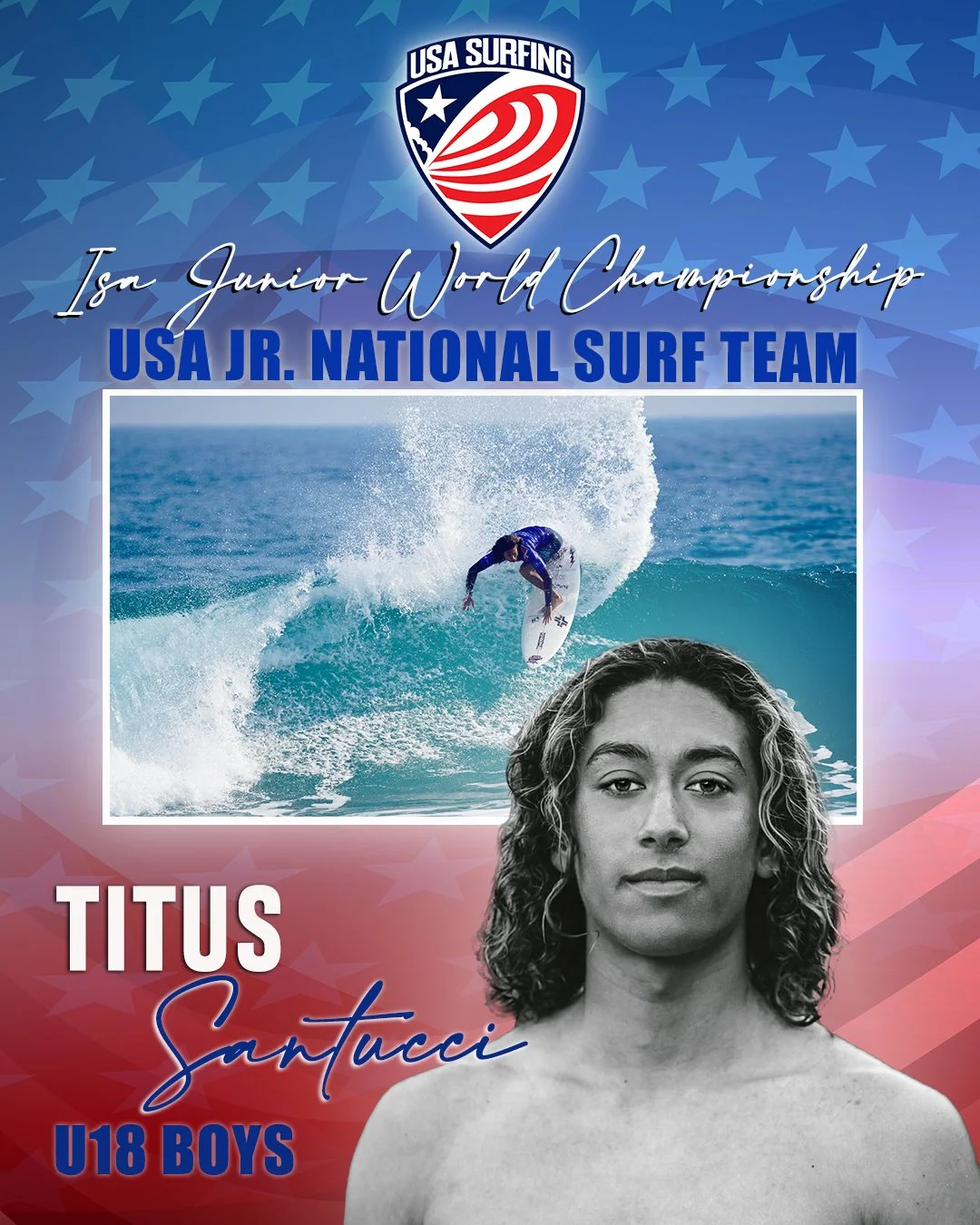
Back in 2023, I made the U.S.A. Junior National Team and flew to Brazil for the ISA World Junior Games – pretty much the proving ground for future Olympians. I was the first Filipino American to make the National Team. I am pretty proud of that. We went up against teams from all over the world and brought home the silver medal – missed gold by just a few points! But the experience was massive and easily one of the biggest comps I’ve surfed.
Fast forward: I earned a scholarship to Westcliff University– the first Filipino American to receive such a massive collegiate athletic contract. I honestly didn’t think I could get a university education and continue my dream of making the World Tour. Westcliff is the only university in the nation that recognizes surfing as a collegiate sport and not just a club. I am so grateful, and I hope other universities will follow suit.
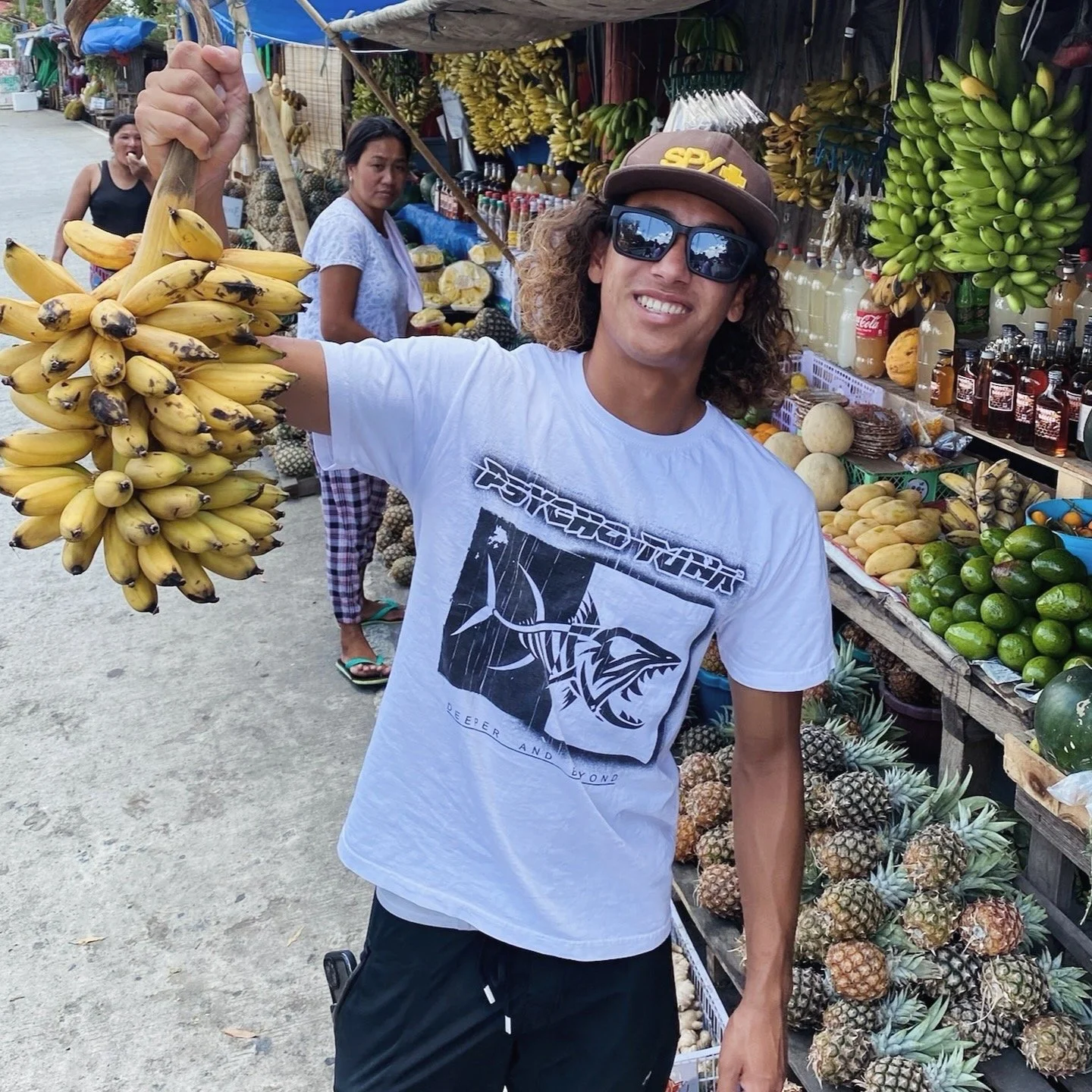
In April 2024, I was picked to be a part of a Netflix documentary in the Philippines called 1 in 7,641 (that's how many islands there are). The Philippine Department of Tourism backed the six-episode series. The idea behind my episode was to bring a Fil-Am surfer to the Philippines for the first time and dive into its “board culture” (the name of my episode) as well as surf some of its best spots. We hit Siargao, Baler, and La Union – each place had its own vibe, waves, and community. We checked out the different breaks, learned the history of how surfing started there, and even met the country's first surf champion. The people, the food, the energy – it was all-time.
Big thanks to Sonia Delen, one of the executive producers, who reached out to me and opened that door. She, along with Gerard Estrella from Ubuntu Studios, gave me a really great opportunity to explore the Philippines and tell that story on Netflix.
2. Tell me about your first trip to the Philippines?
Titus Santucci: It was such a good experience. I want to go back so bad. The waves are so good there! Going into it, I heard that there were good waves. There's one wave called Cloud 9, which is popular and known amongst surfers around the world. I kept an open mind but didn’t really know what to expect. It blew me away how much they were willing to share. I definitely want to go back and explore more.
I did not get a chance to meet my mom’s family, but I would like to go back and explore where my grandparents are from. My grandpa is from Iba and my grandma is from Olongapo. We are hoping our next trip will be to visit our relatives and find ways to give back to the community.

3. Did you know what you were getting into being a part of the documentary?
Titus Santucci: Not really. (laugh). It was an aggressive schedule. Jag Concepcion, the director, and the production team gave us a brief overview of our plans. We flew into Manila for a few days, then we went to Siargao for three days. We came back to Manila, then went straight to Baler. From Baler we went to La Union. We spent a couple of days in each place. It was a wild ride and non-stop shooting, surfing, traveling, waking up before light, and shooting into the night. But it was all an incredible experience.
I kept an open mind and rolled with what the production and film crew had lined up for us. Also, my mom’s friend, Mike Oida, met up with us and set us up with the biggest surfers in each of the areas. He got us in tune with the right people. We also hooked up with a well-known YouTuber named Kulas (Kyle Douglas Jennermann) – locals know him as the Becoming Filipino guy. We didn’t really know who he was, but it was crazy walking around with him. It was like walking around with one of the biggest movie stars – locals calling out his name from the street everywhere we went! It was wild! He was super cool to hang with.
4. How did you get into surfing?
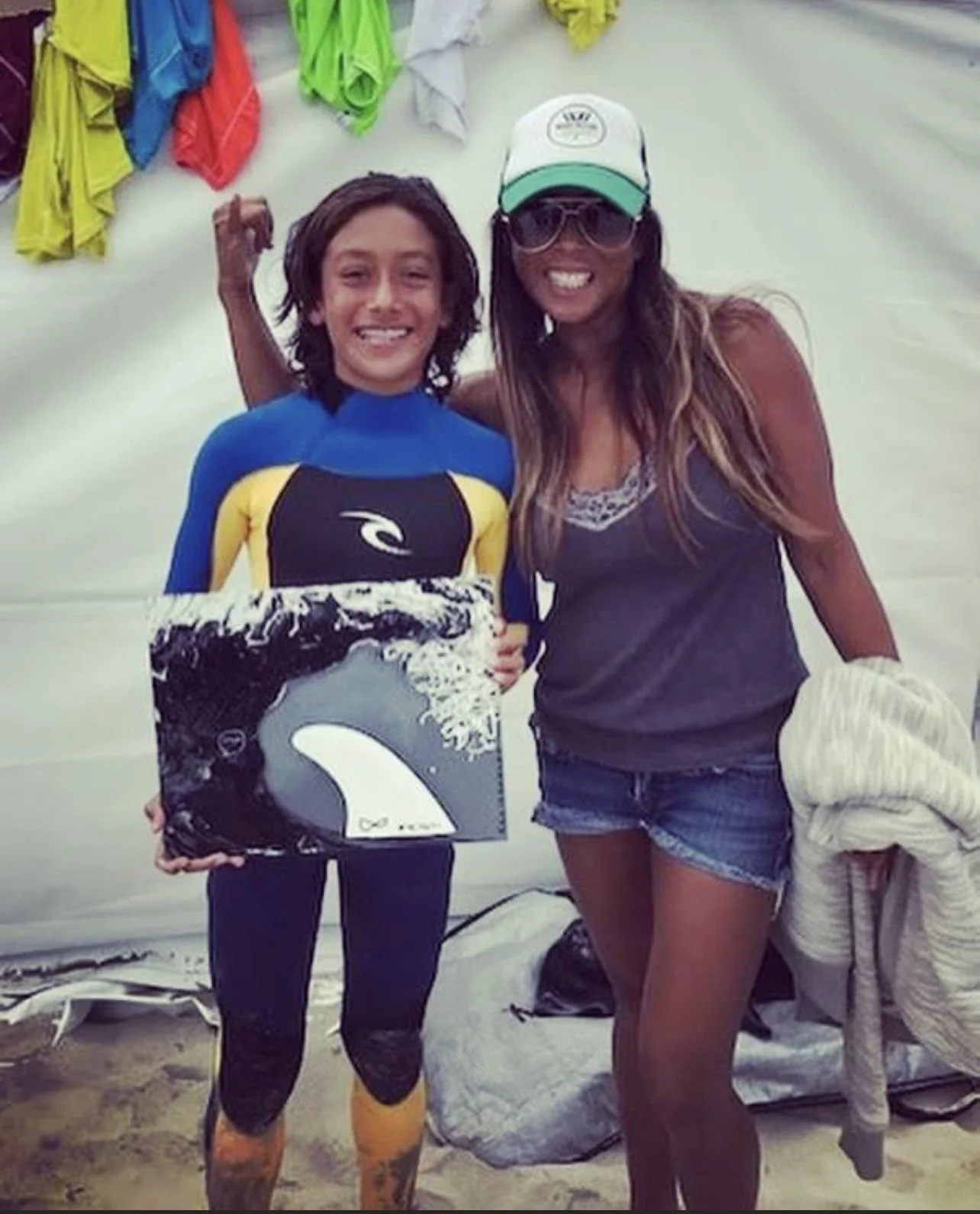
Titus Santucci: My parents! Both my mom and my dad surf, and it started with just them pushing me on a boogie board. I rode a boogie board forever up until I was nine years old – even standing up on it and riding it like a surfboard. But I was stubborn and wouldn’t surf. When I finally tried surfing, I loved it. My parents always took me to the beach, and I fell in love with surfing and kept at it. I entered my first surf contest at 12 years old and won! I’ve been competing ever since.
5. When did you find time to train and compete as a student?
Titus Santucci: I did traditional school all the way up until my sophomore year of high school. When COVID hit (I was in the eighth grade ), I moved online like everyone else. When COVID ended and everything opened up again, I went back to school in person all through my sophomore year. Because of COVID, my high school offered an online program where students could choose if they wanted to go in person or stay online – perfect timing, because that is when I started traveling a ton for surf competitions. I knew balancing school, training, and traveling would be tough, so I switched online. It made it easier to work on my own time and then put real focus on surfing. I finished my junior and senior year online, and I’m keeping that flow going in college too.

6. What’s your daily routine?
Titus Santucci: I am pretty disciplined. My mom says that I am a 30-year-old man in a 19-year-old's body because I am so disciplined with my schoolwork and training. I have everything scheduled out. My friends call me Robot (laugh) and Monkey – no idea.
My day starts at 6 AM with breakfast, then a two-hour surf session working on technique. I come home for a snack, then review video – breaking down lines, decisions, and what I could have done better. Midday, I hit the gym with my trainer, Wes Collins, in Carlsbad. He is a surf-specific trainer, so we focus on movement patterns specific to surfing, strength, and injury prevention. After lunch, I head back to the beach for an afternoon surf session for a couple of hours. I watch more video, then I move into recovery mode. I stretch, journal, and work on my mental health. I do school work, then just relax and enjoy my leisure time. I am in bed by 9:30 PM, especially if I know the waves are going to be good the next day.
I usually sleep early, but on the weekends I’ll hang out with my friends like any other teenager. We still go out and have fun, but most of my time is locked in training. The cool part is that a lot of my friends grew up surfing with me. And now they are grinding alongside me. So those gym sessions and those early morning and afternoon sessions are with my best friends. It’s a good time!
7. How does it feel to be “the first” Filipino-American male to make it on the U.S. junior surf team?
Titus Santucci: It’s surreal to be “the first” Filipino-American male to make it on the U.S. junior surf team. It was always a goal of mine to make the U.S.A. junior surf team. And to be the first to get the massive athletic scholarship was something I never knew was possible.
8. What’s the difference between American and Filipino surf culture?
Titus Santucci: I've been to a lot of different places like Indonesia, Central America, and South America – and honestly, surf culture has the same vibe almost everywhere. There's a common theme of wanting to localize spots and almost gatekeep your waves. In places like Hawaii, that gatekeeping is real. If you paddle out and you're not from there and you paddle out to the peak (the prime spot where the waves break the best), locals will give you a weird vibe like you shouldn't be there. They make it very clear that it's their wave and they don't want to share it with everybody.
But when I got to the Philippines, it wasn't like that. I met a local pro-surfer, Philmar Alipayo in the morning. We paddled out, and I felt super welcomed by everybody. Usually, your first year at a new break, you’re stuck on the inside while the locals snag the sets and keep you away from the top of the peak. But on my very first session, within 30 minutes, a couple of the local guys waved me out the back and fed me set waves. It was so crazy – in the best way! They were super welcoming and really friendly. It's so different from a lot of other places in the world. Filipinos want to share, and they want to see you as stoked as they are.

9. Do you feel that Siargao is becoming super touristy?
Titus Santucci: I think it's definitely more touristy than the other places in the Philippines that we went to, but I think there are good aspects and bad aspects of it. Tourism obviously helps local businesses, but what they need to try to avoid is turning it into what the surfing world knows as the “Bali scenario.” Bali developed way too quickly, and now it’s scattered with hotels everywhere, and it's overpopulated with tourists and tons of trash everywhere.
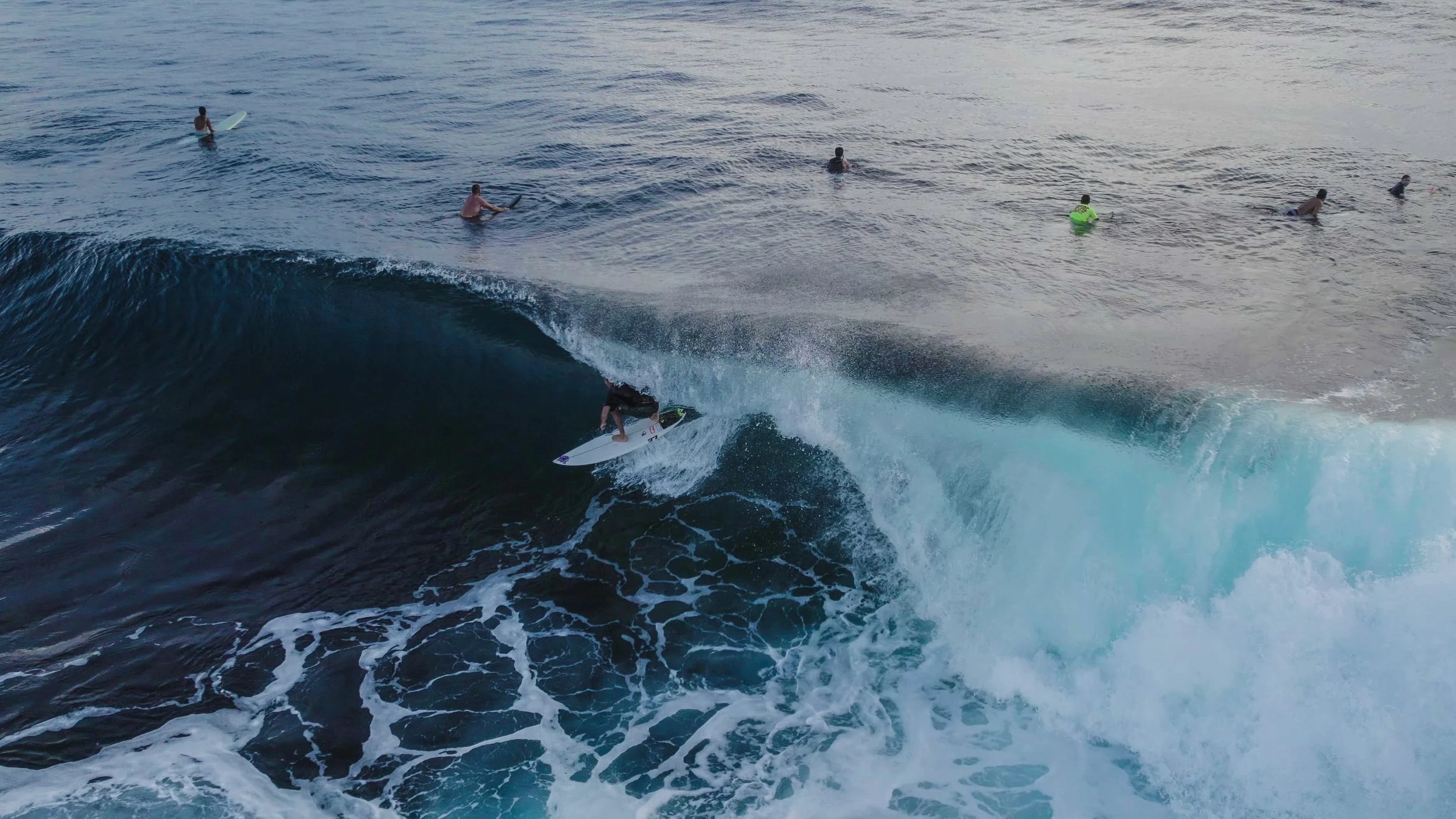
Tourism is good, and I think they do want it, but in the right way, if that makes sense. It’s so beautiful in Siargao. The local surf community is trying to put in different small measures to make sure it doesn't get out of hand. I heard there is a new rule that they are enforcing, and I am all for it. Beginners are not allowed to surf the main lineup at Cloud 9. Beginners are at risk of putting themselves in danger, as well as others. Cloud 9 is what is considered a “slab”. It's a really heavy barreling wave over super shallow water over sharp reef. So, if you're in the wrong spot, the wave can hit you and then send you straight to the reef, and you can really hurt yourself. It's one of those waves where if you're an advanced surfer, it's the greatest wave ever, but if you're a beginner, it's super dangerous. There are waves closer to the beach that are meant for beginners and instructors. They will have a better experience there.
10. In the documentary, there was a mention of you possibly becoming the first Filipino short border world champion. What are your thoughts on that?
Titus Santucci: That would be rad! There's a lot of talent in the Philippines. One of the local surfers, John Mark Tokong, even qualified for the Challenger Series. That's the next step up in the pro series, getting closer to the Championship Tour. He's really good. I'd love to surf for the Philippines, but there is a lot of great talent there.
Now that I am over 18, I am focused on the World Surf League (WSL) Qualifying Series – the start of the pro series. It starts with the qualifying series, then the Challenger Series, and then, at the top, the Championship Tour. The Qualifying Series is basically a regional circuit. Our region is North America, with 400 pro surfers competing– arguably the hardest region. My main focus is on that and getting good results, and then qualifying for the next tier of competition, and then eventually the Championship Tour one day. Besides that, it would be really great to qualify for the 2028 Olympics in Los Angeles. Maybe for the Philippines!
11. Where is your favorite place to surf in the world?
Titus Santucci: I really, really want to go back to Siargao to surf Cloud 9 in the Philippines. That was one of my favorite waves in the world. It's the perfect dream wave for a regular footer like myself because it's a right slab off the takeoff. You stand up, and you get barreled right off the takeoff. Getting barreled is every surfer's favorite thing! After you get barreled, it has another section where you do a big turn, and then an end section to do an air. It’s what I would consider a perfect wave. I would love to go back there and surf that wave again.
It would be great to be bi-coastal – to live in California and in Siargao! Siargao reminded me a lot of Bali, but without the over-touristy vibe. Siargao has really good waves, less people, and there's a good nightlife there. I didn’t partake because I had to be up at 5 AM to shoot. Next time, I will definitely join my friends for a night out at the clubs! Even though I sleep early, I do like to go out and party every once in a while.
12. What's your favorite Filipino food?
Titus Santucci: Lumpia! 100%. It's my favorite. My mom always makes it – well, she fries it for me, but my grandma makes it from scratch.
13. What are you up to now and what’s next?
Titus Santucci: I am in college and I am focusing on training for the World Surf League (WSL) Qualifying Series. I want to put my best foot forward and I am trying to qualify for the Challenger Series. In a month or so, we will be traveling to Puerto Rico. I’m hoping to get a good result there. I’m just doing a lot of training right now to get ready for it.
I’m set on getting back to the Philippines and giving back to the local surf scene. The Pro pathway isn’t fully there yet. There’s a real need for board, gear, consistent coaching, gyms and more contests. The talent is legit. Imagine if they had the same support we have here in California – the level would explode. There are guys in the Philippines are that good. They just don’t have the same opportunities. That’s where I would like to help somehow.
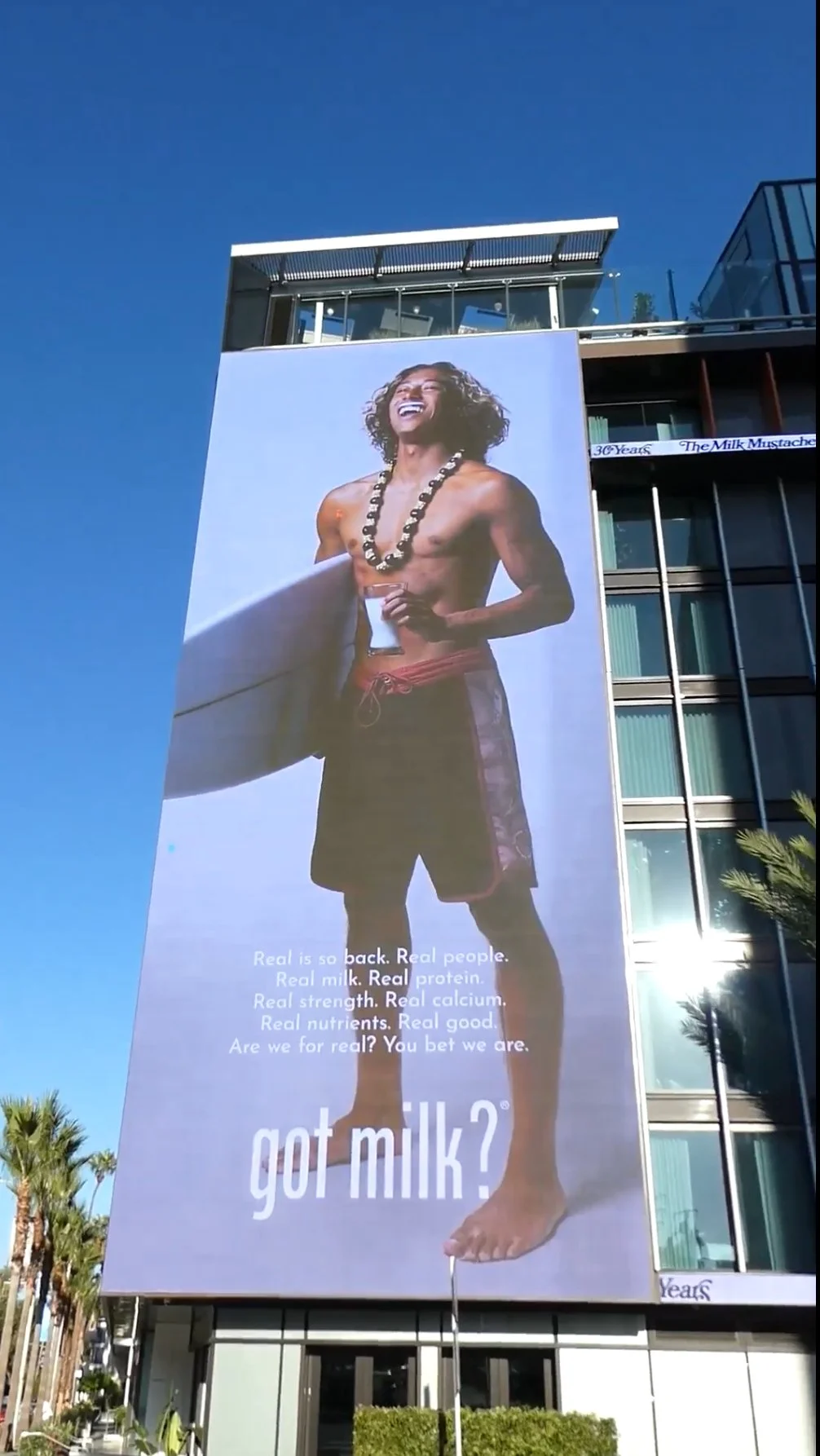
Most recently, I was hired to be a part of the Got Milk? Campaign. They brought back the iconic Mustache Man. My mom told me about the audition while I was in Indonesia on a surf trip, so I had to send a video from the balcony of this sketchy hotel. But I think I got the message through, that even though I am a regular guy – a surfer – I think it's my mission to be a good role model for the Filipino youth, and especially surfers, to go for it. Think big and aim high. You have nothing to lose. You will always have your Filipino community behind you. They must have felt it because they picked me as one of the people to feature on the campaign. You can spot my poster, amongst the other folks, on Sunset Blvd. near the Los Angeles Dodger Stadium. I’m super stoked on how it turned out and to be part of such an iconic campaign.
14. What does it mean to be Filipino?
Titus Santucci: I'm super proud to be a Filipino. We have a very supportive network – our community feels like family. Everyone is so loving, caring, and supportive. I did not grow up with a lot of Filipinos, so it’s been really nice to see the outreach of Filipinos showing me love and showing me support. It’s a really good feeling to have that kind of support behind me – it’s beyond amazing. It makes me want to push harder for my Filipino squad and make them proud.
Doing it myself is one thing, but knowing people believe in me and are proud of what I’m doing? That feels incredible!
15. Where can people find you?
Titus Santucci: The best place to find me is on Instagram at @titus_santucci. You can check out my episode “Board Culture”, in the docuseries 1 and 7641 on Netflix or through this link.
Written by Jennifer Redondo
Co-Founder and Co-Author of In Her Purpose














When the Avengers: Doomsday one-year countdown dropped, audiences didn’t just watch. They paused, replayed, shared, and even speculated about hidden messages. A week later, the clip surpassed 14 million views, becoming a viral moment picked up across major media outlets that fueled anticipation for the next chapter of the Marvel Universe.
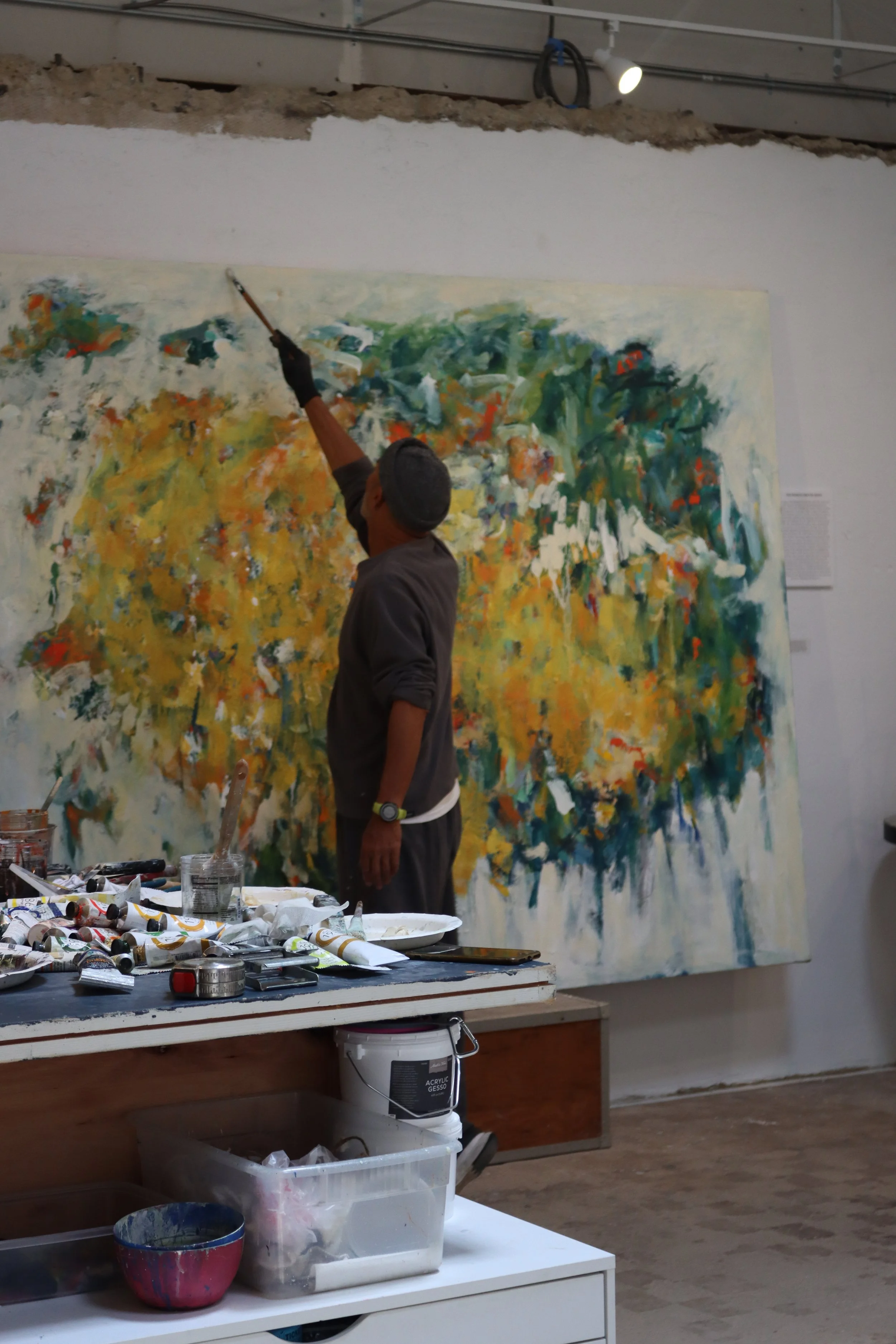
The countdown video was the result of a collaborative effort led by AGBO and its studio partners. Supporting the marketing team as a contracted editor was Joshua Ortiz (@joshuajortiz), a Filipino American filmmaker whose career has steadily built toward opportunities to contribute to projects of this scale, alongside earlier success with the short films he has written and directed.