

Loving a Homeland From Afar | The Politics of Filipino American Influence
Loving a Country You No Longer Live In: When Filipino American Power Meets Philippine Politics
Written by Clifford Temprosa
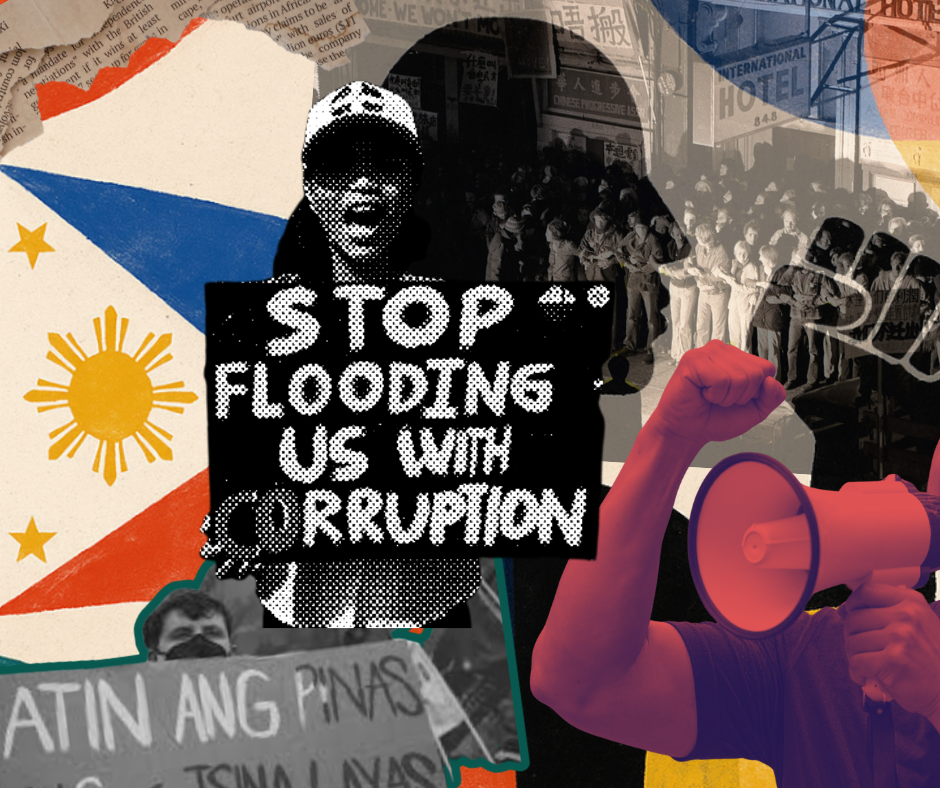
Exile as Evidence
We left the Philippines because of politics. That doesn’t mean we left politics behind.
Last September, outside the Philippine Consulate in New York, an elderly nurse held a cardboard sign that read, “My mother left because of Marcos. I march so no one else has to.” Beside her, a teenager raised the same slogan in marker still wet from a Sharpie. The chant echoed down Fifth Avenue — two generations, one exile.
Every election season, the same tension resurfaces — on Facebook, family chats, and community forums: Should Filipino Americans have a voice in the politics of their homeland? Should those who no longer live its consequences still help decide its direction?
It’s not just a question of legality. It’s a question of legitimacy.
Migration was never a lifestyle choice. It was an act of survival. Our families were pushed abroad by the same forces we now critique: corruption, wage inequality, the systematic export of labor that turned human mobility into national policy. We didn’t escape politics. We became its evidence.
If the Philippines is a nation scattered, then the diaspora is its conscience distributed. But a conscience divided can easily become a competition — between those who left and those who stayed, between memory and immediacy, between belonging and influence.
Diaspora Democracy: A Nation in Two Places
There are over 12 million Filipinos abroad — roughly one in every ten. Collectively, they send home more than $36 billion a year. That’s not just remittance; that’s political oxygen.
Those remittances pay for tuition, rebuild homes after typhoons, and stabilize communities that the government fails to reach. But that same economic power has created a quiet imbalance: a nation that depends on those it has driven away.
Overseas Filipinos are praised as bagong bayani — modern-day heroes — yet rarely invited into policymaking. Their labor is counted; their voices are not. This contradiction defines diaspora democracy: Filipinos abroad sustain the state financially while existing outside its political imagination.
But diaspora democracy also holds potential. When organized, the global Filipino community can serve as both watchdog and bridge — connecting reformers, funding civil society, and bringing global attention to issues that might otherwise remain buried in bureaucratic silence.
The question is whether that power remains collaborative or slips into paternalism.
The Moral Geography of Distance
Filipino Americans occupy a unique moral geography. One foot in the nation that raised them, another in the empire that received them. That duality offers perspective, but also distortion.
Distance can clarify injustice; it can also dilute empathy. It’s easy to critique from comfort, to demand transparency without understanding the fear that silences those at home. And yet, Filipino Americans also fund community bailouts, mobilize for disaster response, and amplify marginalized voices that would otherwise be erased.
Diaspora power is not inherently virtuous or exploitative. It is conditional. Its ethics depend on proximity, partnership, and purpose.
To participate meaningfully from abroad requires more than passion. It demands listening, learning, and restraint. Influence without context is interference. Context without courage is complicity. Diaspora democracy must find its balance between the two.
Distance gives us the illusion of innocence as if being far means being clean. But silence, too, is a form of participation.
A Nation Built on Departure
The Philippines did not simply lose its people to migration; it built an entire economy upon their absence. Since the 1970s, the state has codified labor export as survival — transforming citizens into commodities. Teachers became domestic workers. Engineers became seafarers. Parents became strangers to their children.
But from that systemic displacement grew an extraordinary resilience. Overseas Filipinos formed remittance cooperatives, community schools, churches, and advocacy networks that have kept families alive and cultural identity intact.
Migration fractured the nation, but it also multiplied it. Every airport became a point of resistance. Every balikbayan box a quiet declaration: We are still part of this country, even if the country no longer knows what to do with us.
We are not merely victims of globalization; we are architects of transnational survival.
We speak of the diaspora as one, but its realities are divided. The nurse on a night shift and the entrepreneur investing in Makati do not share the same freedoms. Our ethics must account for class, not just compassion.
Representation as Responsibility
Representation is a double-edged inheritance. Filipino Americans hold political seats across cities and states. Their success is a testament to resilience but also a reminder that influence comes with obligation.
Social media has further blurred the line between visibility and authority. A single viral tweet or video can shape global narratives about the Philippines overnight. Yet not all representation is equal; some amplifies, others erases.
The Filipino diaspora must ask: when we speak about the homeland, do we extend understanding or export assumptions? When we critique corruption or celebrate progress, do we honor local complexity or flatten it for our audiences abroad?
Representation should not be performance; it should be presence with purpose.
The Politics of Philanthropy: When Aid Replaces Agency
Every December, balikbayan boxes fill the airports — gifts, supplies, and remittances crossing oceans as symbols of love. Yet within this generosity lies an uncomfortable question: when does help become control?
Diaspora philanthropy has long been the lifeblood of Filipino communities. It builds classrooms, sponsors scholarships, funds typhoon relief, and supports churches. But philanthropy, too, can shape politics. Money moves faster than democracy, and sometimes louder than it.
When Filipino Americans fund local politicians or NGOs, their influence often extends beyond intent. They shape which issues get visibility, which leaders rise, and which narratives endure. And because they operate outside local accountability structures, this form of giving can quietly replicate the same inequalities migration once sought to escape.
Good intentions don’t cancel power — they clarify its responsibility.
The solution isn’t to stop giving. It’s to give with consciousness. Diaspora philanthropy should build capacity, not dependency; autonomy, not allegiance. It must remember that aid, if unchecked, can silence the very people it claims to uplift.
The homeland doesn’t need more donors — it needs partners who understand that generosity without humility is still a kind of governance. We left a country shaped by empire only to inherit its tools - currency, language, access. The question is whether we use them to dismantle walls or to decorate them
True solidarity gives not to be thanked, but to be replaced — when communities can stand without your funds, your giving has done its work.
Protest as Presence
From New York to Los Angeles, Filipino Americans have turned city plazas into living archives of resistance.At Times Square, chants of Never Again echoed during Marcos Jr.’s visit. In Washington, nurses and students held vigils for victims of the drug war. Each protest was both remembrance and reclamation, but a refusal to let history repeat itself unnoticed.
But protest abroad carries a different weight. The diaspora marches in safety while activists at home face red-tagging and repression. Safety is both privilege and responsibility.
The ethical test of diaspora activism is not whether we speak, but how we use our distance to protect — not project.
Solidarity abroad must mirror, not overshadow, the struggle at home. Otherwise, protest becomes performance. A spectacle mistaken for sacrifice.
The Digital Divide: When Hashtags Become the New Activism
The Filipino diaspora lives online — hashtags, livestreams, solidarity campaigns. Our digital presence has become a global stage for outrage, pride, and persuasion. But in this new frontier of visibility, activism often collides with attention.
A viral post about corruption can mobilize thousands, but it can also flatten complexity. A meme can inspire solidarity while reinforcing distance — engagement as performance, advocacy as algorithm.
The internet has given the diaspora a megaphone, but not always a map.
Digital activism matters; it democratizes participation for those who cannot march in the streets. But we must ask: what happens when our online voice outpaces our offline action? When “awareness” replaces accountability, or when advocacy becomes a brand?
The ethics of digital influence demand more than retweets. They require relational truth — collaboration with those living the consequences of what we post about. The measure of diaspora advocacy is not how viral it goes, but how deeply it listens.
Visibility can be a weapon. But it can also be a mirror. To use it ethically, we must reflect before we amplify.
Because a revolution built on Wi-Fi can connect us — but it cannot absolve us.
Power and Proximity
Filipino Americans sit at an intersection of privilege and power rarely available to their kin at home. They can raise millions for disaster relief and still misunderstand what it means to live under daily disinformation. They can campaign for democracy in New York while forgetting that democracy in the Philippines often comes with danger, debt, and doubt.
Power without proximity easily drifts into presumption. But proximity without power leaves suffering in silence. The solution is synthesis — influence grounded in humility, access matched with accountability.
Diaspora power is ethical only when it remembers its distance. The goal is not to replace proximity with voice, but to let empathy travel faster than ego.
Our mobility is built on the same global hierarchies that keep the Philippines unequal. To critique corruption without naming our comfort is to edit ourselves out of the story.
Generations Without Origin, Still in Motion
For second- and third-generation Filipino Americans, the homeland exists as an inheritance rather than a lived experience. They did not leave — they were born into the consequences of departure. Their understanding of “Filipino” comes through food, fragments of language, and stories half-remembered.
Yet in them lies a new possibility. Unburdened by nostalgia, they can imagine solidarity as future-building, not memory-keeping. When they fund schools, volunteer, or visit ancestral towns, they reshape what belonging means. Their challenge is not guilt — it’s growth.
Identity is not about return; it’s about relevance. Their task is to transform pride into participation and visibility into value.
The Ethics of the Unreturned: When Non-Nationals Speak for the Nation
There is a growing generation of Filipinos abroad who are not citizens of the Philippines — the children and grandchildren of migration, often with foreign passports but Filipino names, faces, and convictions. They are the non-national Filipinos — people who live outside the state’s jurisdiction, yet inside its imagination.
They march in rallies, donate to relief drives, and post in defense of democracy. Some testify before the U.S. Congress about Philippine human rights. Others fund media projects or sponsor election observers for a democracy they no longer legally belong to.
Their advocacy is sincere, but their position is ethically complex. Can you represent a nation that no longer claims you as its citizen?
Non-national Filipinos wield soft power amplified by global privilege. Western institutions often treat their perspectives as “objective,” assuming distance grants neutrality. But distance also risks distortion — turning solidarity into substitution.
We are often praised as ‘thought leaders’ on our homeland precisely because we speak its pain in English. That translation grants legitimacy abroad but invisibility at home.
Their words carry influence; their intentions, weight. But when foreign governments cite diaspora criticism to justify intervention, solidarity risks becoming a tool of geopolitics. The challenge is not silence, but reflexivity — transforming advocacy from projection into partnership.
Citizenship is not the only measure of belonging, but belonging without humility can still become colonial. For the unreturned, ethical engagement begins with restraint — to fund without controlling, to uplift without claiming, to love without owning.
The homeland does not need saviors abroad. It needs witnesses who understand that real care begins with listening.
Nationalism without citizenship is still possible, but only when it is practiced as accountability, not authority.
The Return of the Privileged: When Homecoming Becomes Power
Every year, flights from Los Angeles, New York, and Toronto land in Manila — balikbayans arriving with accents, savings, and expectations. Many return with good intentions: to invest, to volunteer, to reconnect. But homecomings are rarely neutral.
The Filipino American who returns often carries not just memory, but mobility — an American salary, a foreign passport, a global education. Those privileges shape how they are seen and how they see others. The return becomes a kind of soft politics: who gets heard, who gets hired, who gets to lead.
In boardrooms and nonprofits, diaspora returnees often rise quickly, armed with credibility from abroad. Yet that same credibility can overshadow those who never left — the organizers, teachers, and workers who kept the nation alive in absence.
Return should not be framed as rescue, but as reckoning.
To return ethically is to ask: whose space am I occupying, and whose silence am I amplifying? The work of the returnee is not to modernize the homeland, but to humanize their presence within it.
The Philippines doesn’t need more experts who left; it needs partners who remember why they did.
The most ethical homecoming is not arrival. It’s alignment. When we return to serve, not to save, the distance begins to heal.
Beyond Influence: What Accountability Looks Like
Cultural accountability means more than critique. It’s building relationships, not reputations. It looks like funding community media instead of just sharing petitions. It looks like supporting farmers’ cooperatives, mental health initiatives, and language revitalization — not just electoral campaigns. It looks like diaspora pride that builds infrastructure, not just festivals.
We cannot decolonize by rejecting everything Western, nor progress by romanticizing everything local. We must move from either/or thinking to both/and responsibility — the kind of solidarity that sustains rather than saves.
Accountability is not confession. It is construction. The slow, collective act of building systems that outlast hashtags.
The Invitation to Keep Thinking
Filipino American influence in Philippine politics is not a question to solve, it’s a relationship to navigate. It will always be fraught, because love and power always are.
Some will call diaspora engagement interference; others, indispensable. Both are right. The truth lies somewhere between, in the tension that keeps democracy alive.
Maybe the point isn’t to decide who gets to speak, but to ask how we can keep the conversation honest. Maybe the work isn’t to draw borders between here and there, but to blur them until accountability crosses freely.
The future of Filipino democracy will not be written by who shouts the loudest, but by who listens the longest.
We are a people born of departure, but not defined by it. The question is no longer whether we belong to the Philippines, but whether we can belong responsibly.
Because influence, like love, is not measured by proximity, but by what it protects.
Maybe our task now is to keep asking, again and again: not “Should we care?” but “How do we care better?”
In that asking — in that refusal to look away — the work continues.
We may never return, but we can always remember. And remembering, too, is an act of nation-building.
This is not a verdict, but rather, it’s an invitation. To Filipino Americans, it asks: How do we use our privilege without becoming what we escaped? To Filipinos in the homeland, it asks: How do we welcome global kin without surrendering sovereignty?
The answers will differ. The questions must remain. Because between distance and devotion lies the future of a nation still learning how to live with its own leaving.
Written by Clifford Temprosa















When the Avengers: Doomsday one-year countdown dropped, audiences didn’t just watch. They paused, replayed, shared, and even speculated about hidden messages. A week later, the clip surpassed 14 million views, becoming a viral moment picked up across major media outlets that fueled anticipation for the next chapter of the Marvel Universe.
The countdown video was the result of a collaborative effort led by AGBO and its studio partners. Supporting the marketing team as a contracted editor was Joshua Ortiz (@joshuajortiz), a Filipino American filmmaker whose career has steadily built toward opportunities to contribute to projects of this scale, alongside earlier success with the short films he has written and directed.