

Before I Knew Pride, I Knew His Uniform | Honoring My Filipino American Dad This Veterans Day
“The Army taught me discipline, but my Filipino roots taught me respect.”
A daughter sits down with her father — a U.S. Army veteran from Olongapo — whose story shows how service and heritage can coexist, shaping a legacy of quiet strength, pride, and purpose.
Written by Jennifer Redondo
November 2025
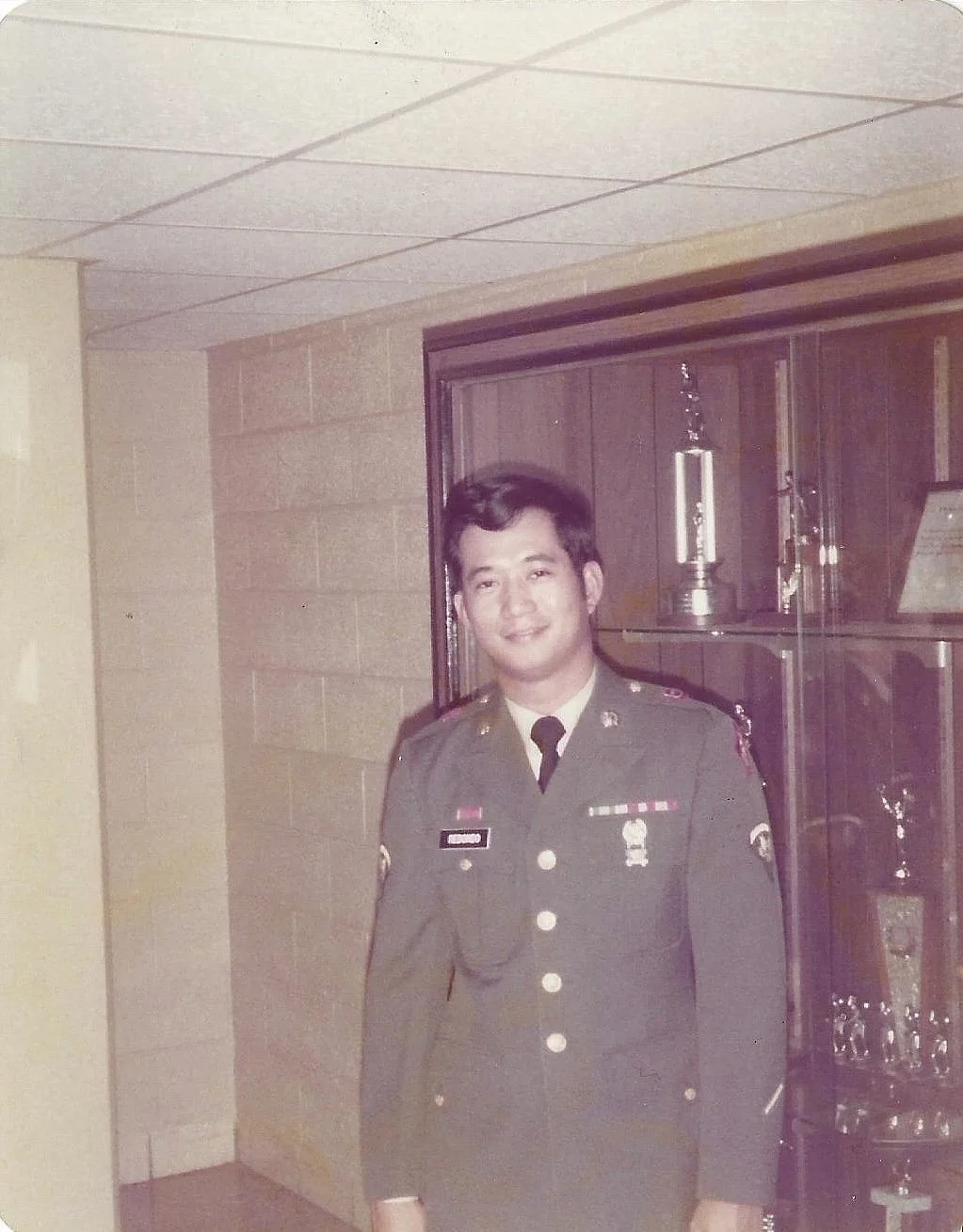
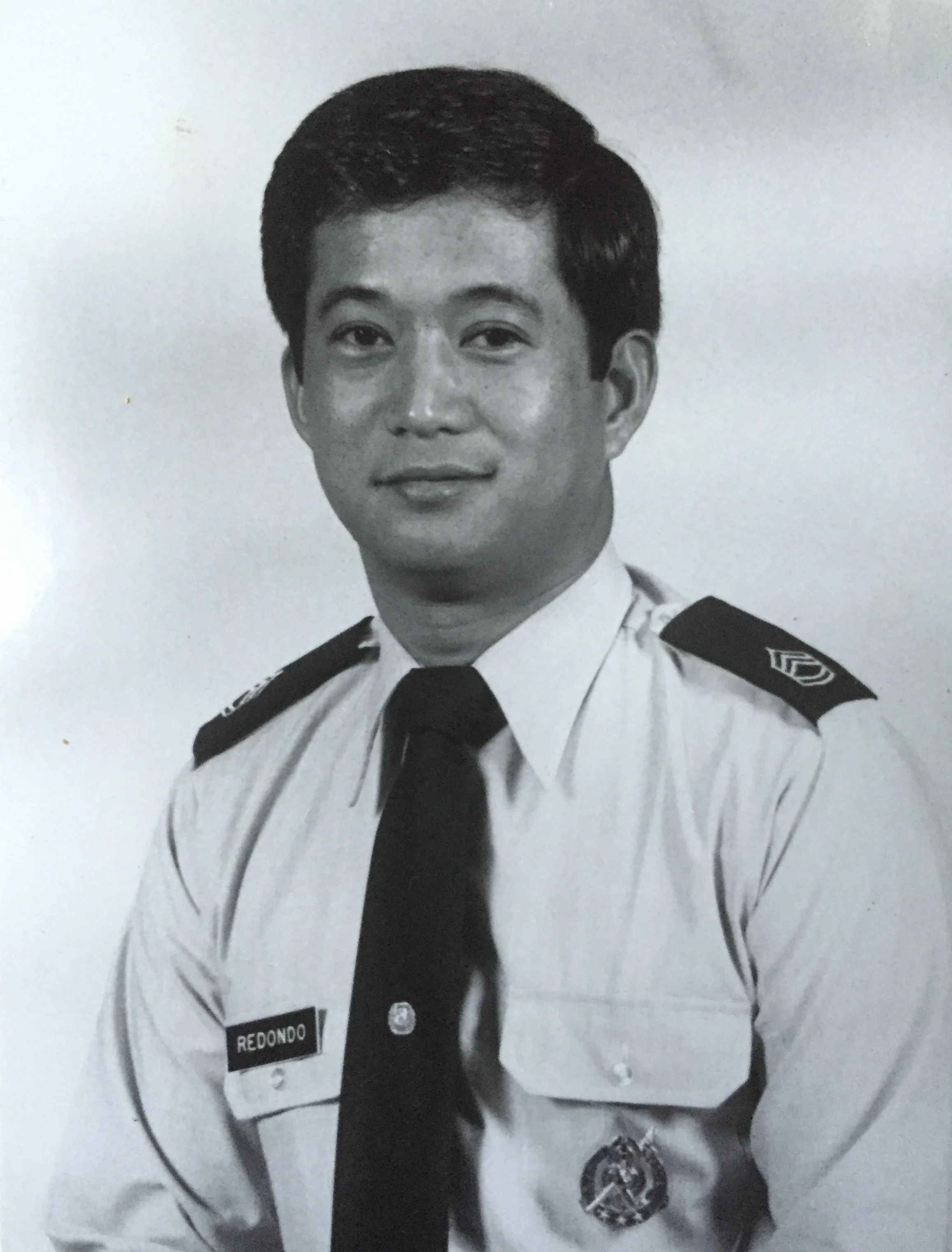
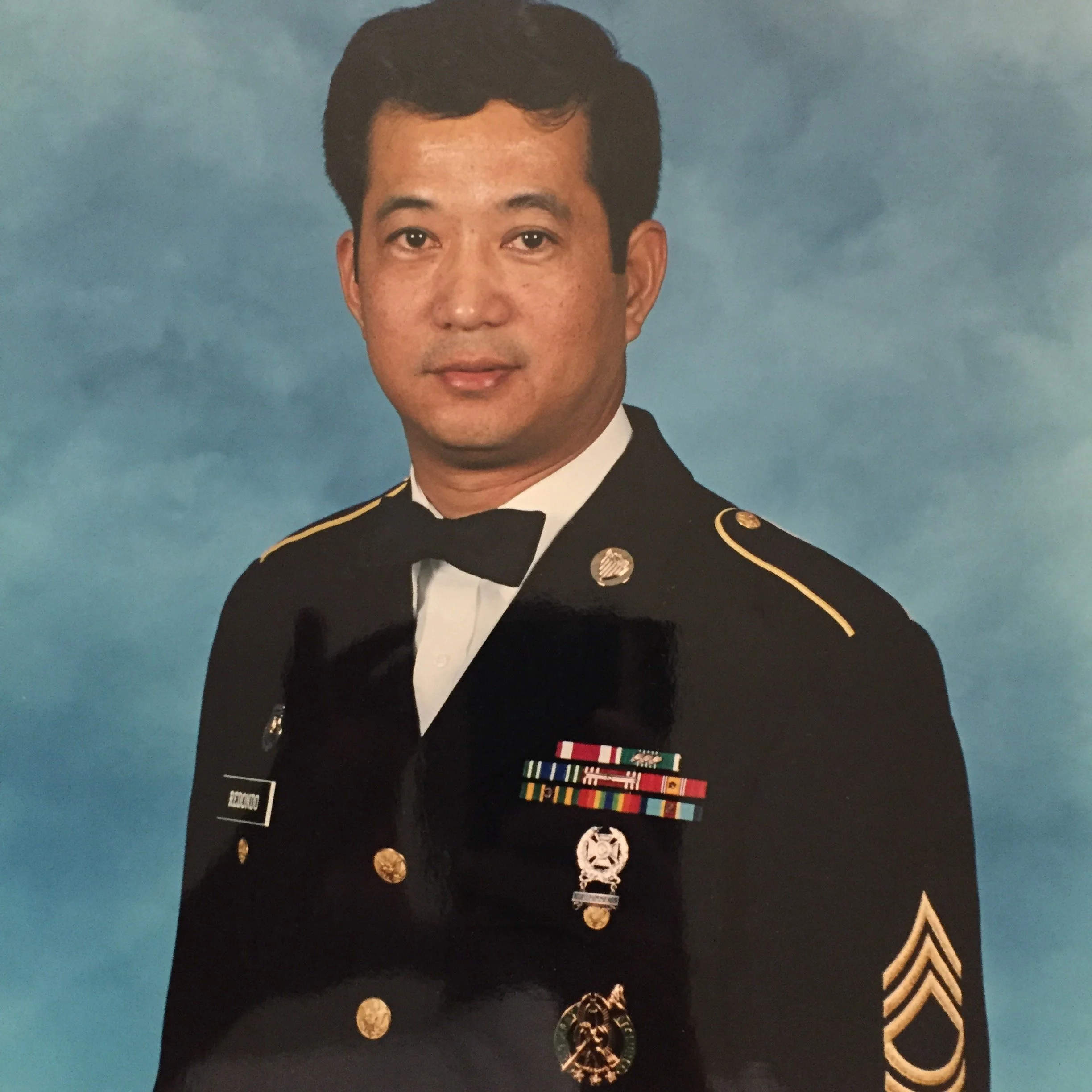
In observance and celebration of Veterans Day, I have the special honor of interviewing someone who means the world to me — my dad- Oscar Redondo. He is a proud U.S. Army veteran and a proud Filipino American whose journey reflects both courage in service and strength in identity.
My dad was born and raised in the Philippines, where he learned the values of hard work, family, and resilience. When he came to the United States and joined the Army, he carried those values with him, serving his new country with dedication and pride.
This Veterans Day, we not only honor his service but also celebrate the path that brought us here — the story of a Filipino who answered the call to serve, and of a family whose life has been shaped by both cultures. Thank you, Dad, for your service, your sacrifices, and for showing us what it truly means to live with pride, purpose, and gratitude.
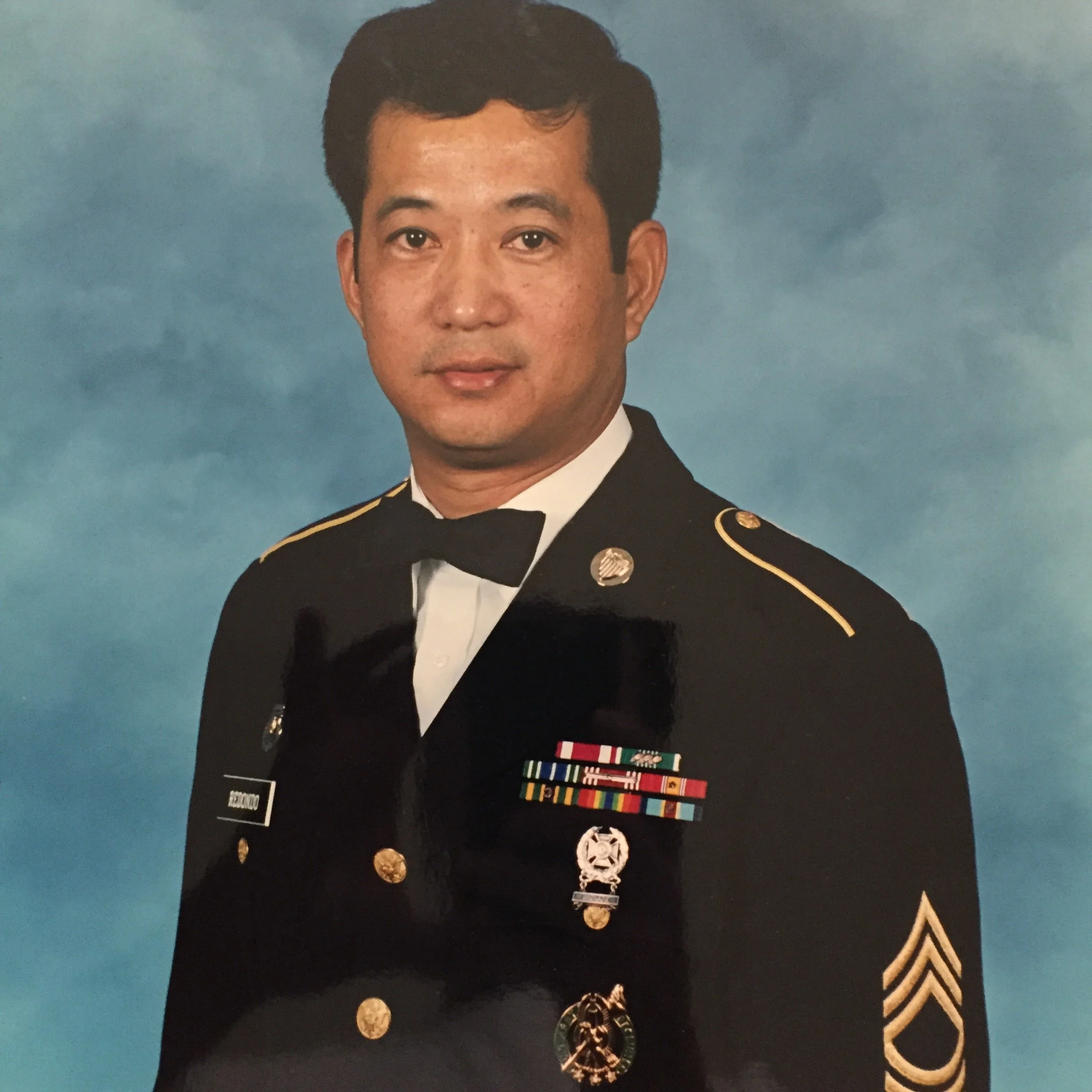
1. Tell us about yourself.
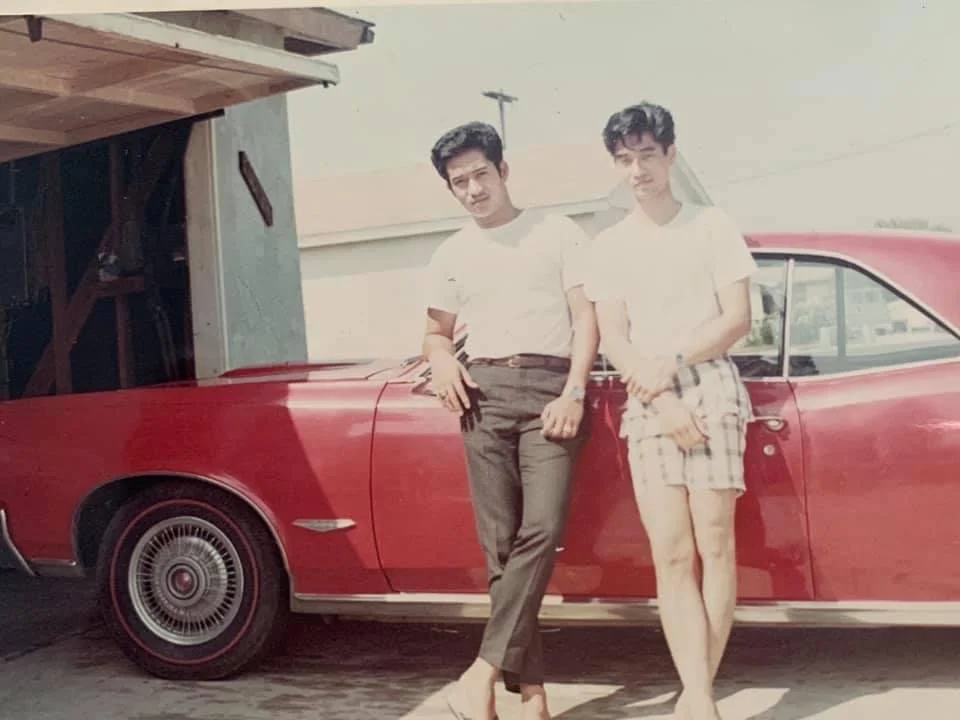
Oscar Redondo: Hello, I'm Oscar. I retired from the U.S. Army after over 38 years of federal service. I was born and raised in Olongapo City, Philippines, also referred to as Subic Bay. I attended the Mapua School of Technology in the Philippines, but I didn't finish because I moved to the United States as a teenager. In 1968, I arrived in San Diego, California, as a tourist.
My older brother joined the U.S. Navy – he was the first one in our family to leave the Philippines. He petitioned our parents, who were able to immigrate to America, bringing my youngest brother Bernie, who was still in high school. With their green cards, my parents then petitioned for me, allowing me to change my visa status from tourist to student.
I lived in Linda Vista with my older brother, Boogie, and some of his Navy friends. I attended San Diego City College and worked part-time to support myself. My first job in America, I worked as a busboy at Harbor Lights, a restaurant in Shelter Island, where I earned $1.75 an hour. A year later, I found work at the K Store, pumping gas, adding oil, and checking tire pressure. At that time, gasoline cost a mere 25 cents per gallon, and a carton of oil was only 15 cents.
At 19, I received my green card and, like all young men over 18, a draft card. My draft number, A121, meant I could be drafted into the military at any moment. The thought of going to Vietnam during wartime was terrifying, so I decided to take control. I volunteered to join the army with the specific goal of getting an assignment in Germany. My recruiter was Filipino so he really helped me get the assignment. Had I not volunteered, I would have had no choice but to go to Vietnam. Joining the army was never my intention, but it was a decision I made to avoid the Vietnam War.
2. Tell us about your basic training experience.
Oscar Redondo: Basic training was manageable, but the most challenging aspect was the run from the barracks to the firing range. Located in Seaside, Fort Ord meant running two to three miles by the sea, fully equipped with an M16, helmet, and boots. I hated running; it felt like a penance, making me question my decision to join the army.
Every morning at 4:30 AM we began Physical Training (PT). Monday through Friday, we ran two miles in running shoes, shorts and shirts, followed by calisthenics such as push-ups, sit-ups and the horizontal bar. Afterwards, we ate breakfast at the mess hall, where we had a time limit. Once you received your tray, you had to eat quickly and finish everything you took. Failing to do so resulted in punishment: 50 push-ups outside for any leftover food. This strict rule is why I developed the habit of eating very fast. I don't chew, mostly I swallow.
Our routine involved training every weekday, morning and afternoon. Saturdays were dedicated to maintaining our barracks, shining our shoes, and pressing our clothes. Sundays were for attending church or practicing our chosen denomination, as well as writing letters or making phone calls. Since cell phones didn't exist, we relied on pay phones, which required collect calls. There was always a long queue, enforcing a strict three-minute time limit per call.
3. Tell us more about your time in the U.S. Army.
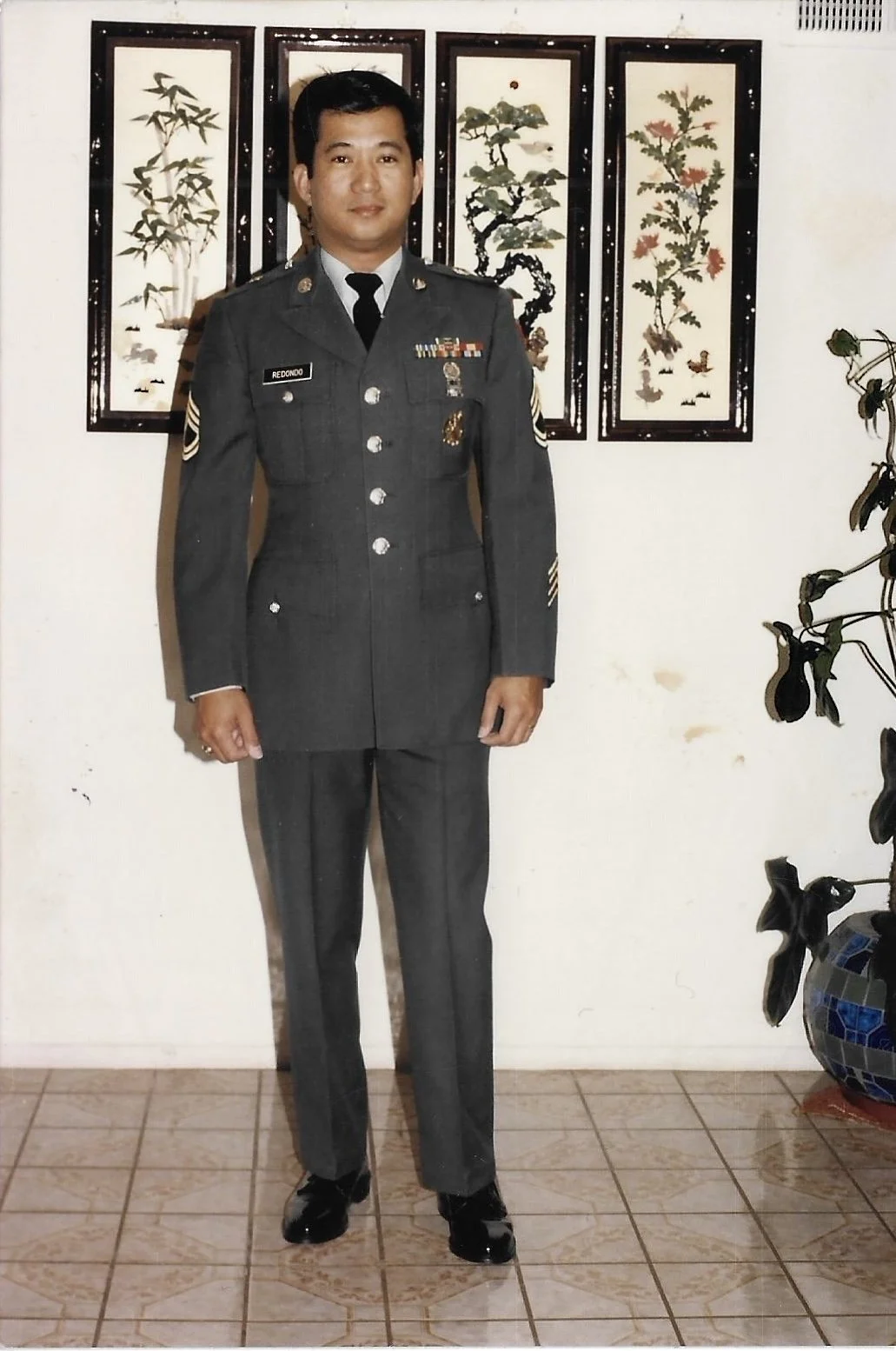
I joined the U.S. Army in June 1972, completing basic training at Fort Ord in Seaside, California. In January 1973, I attended Advanced Individual Training at Fort Eustis in Virginia. My first assignment was in Manheim, Germany, where I served for three years as a dispatcher with the motor transportation group. Upon promotion to E5, I became the company's drug and alcohol specialist, responsible for conducting unannounced drug tests.
In January 1976, I was assigned to Camp Tongduchon, South Korea, near the DMZ (Korean Demilitarized Zone). I was assigned to the engineer battalion as a TAMM clerk. I was responsible for making sure that all the army’s transportation scheduled maintenance was being done.
In January 1977, I returned to Fort Eustis, Virginia, where I spent four years working for the transportation brigade. I served as Colonel Charles Beitz’s aide, essentially his right-hand man. Both he and Sergeant Major William Leach were instrumental in my promotion to E6, and Leach also assisted me in securing my subsequent position in Korea.
In January 1980, I returned to Korea, where I was stationed at Yongsan, near Seoul. My role was similar to a Department of Motor Vehicles (DMV), but for the military. I was responsible for issuing military licenses and photos to U.S. military personnel and Korean soldiers serving with the U.S. Army.
4. While serving in the military, did you experience combat?
Oscar Redondo: Though I served during a period of multiple conflicts, including the Invasion of Grenada, Invasion of Panama, Kuwait, Afghanistan, and the Gulf War, I was fortunate not to be deployed myself. My role was in recruitment, where I helped many individuals join the service, directing them to placements both overseas and within the U.S. Ultimately, once a unit is activated, deployment becomes mandatory. You have to go!
5. At what point did you return to the United States?
After leaving Korea in January 1981, I was assigned to Fort Ord, California, the same location where I completed my basic training. I was a platoon sergeant for three months.
In February 1981, I was introduced to my future wife, Juanita, through my compadre, Alberto Atis, and his wife, Edna, who is Juanita's cousin. Back then we didn’t have FaceTime or laptops, so our initial introduction was over the phone and through photos. I then went to see her in Los Angeles. Juanita picked me up at LAX airport, and she later confessed that she had hidden behind a post, ready to leave if she hadn't liked what she saw! Thankfully, she found me good-looking and, as she put it, "fell in love with me the first time she saw me." We had our first dinner date, and our relationship quickly blossomed. After about a month, we were officially boyfriend and girlfriend. For a while, I drove back and forth between Fort Ord and Los Angeles every weekend to see her.
In May 1981, I got picked up to do recruiting duty. I attended recruiting school for two months in Fort Benjamin Harrison in Indiana, Indianapolis. Having recently married and purchased a house, I requested an assignment in either Los Angeles or San Diego. However, in August 1981, I was assigned as a recruiter to Garden Grove.
Recruiting for the military was a challenging role, as it required identifying individuals genuinely interested in serving. In the past, this involved visiting schools, malls, and even homes to gauge interest. I successfully recruited many individuals into the army. In 1983, I was assigned to the La Habra office, which was a two-man station. I was promoted to Sergeant First Class E7. By 1988, I was stationed in Fullerton, California, a larger station where I commanded eight recruiters. My coverage area as station commander included Anaheim, Garden Grove, Westminster, Cerritos, and Corona.
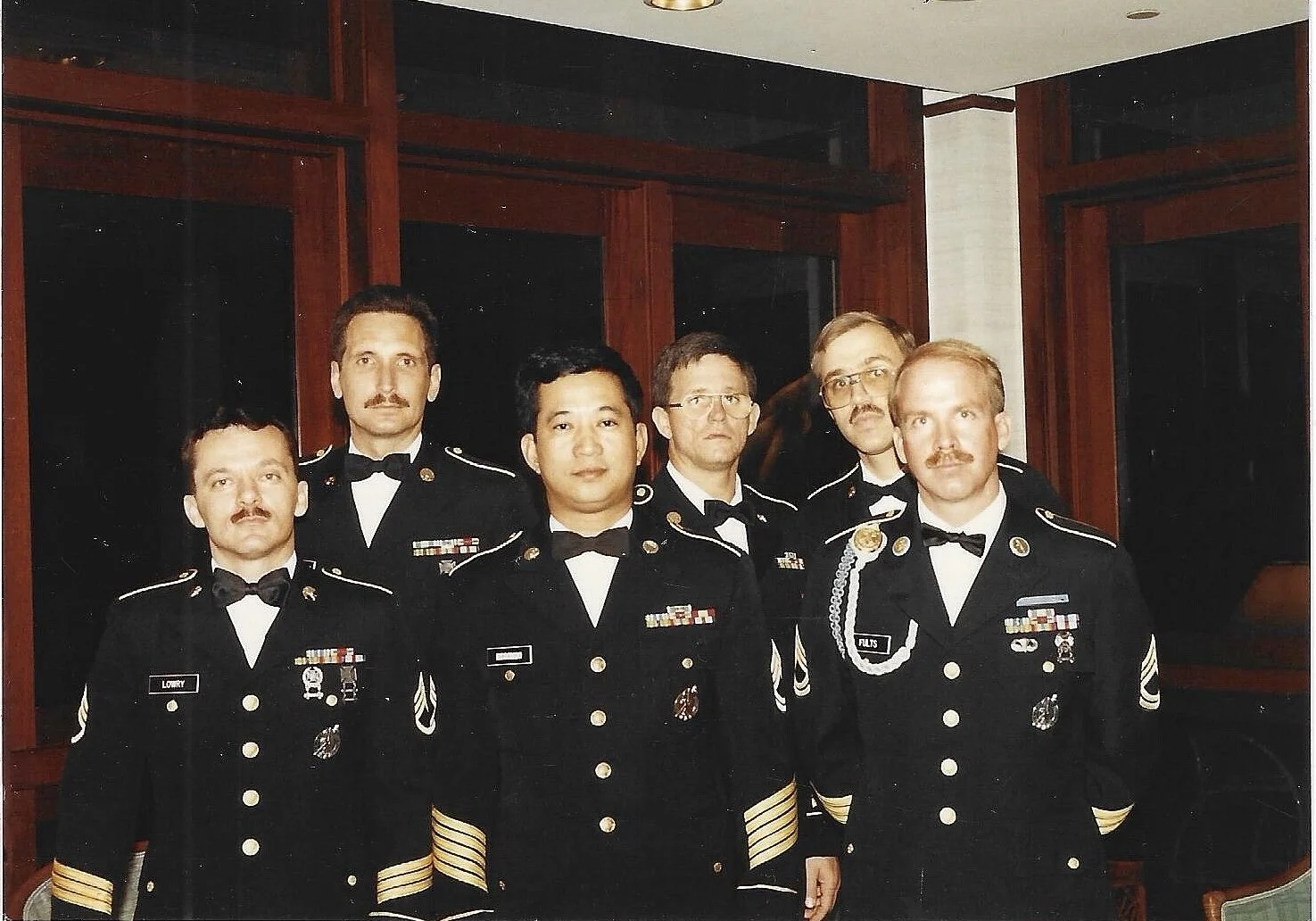
In 1989, I received a new assignment as a senior guidance counselor at the Military Entrance Processing Station (MEPS) in San Diego, California. Before reporting to San Diego, I attended an eight-week guidance counselor course in Fort Benjamin Harrison. That September, I was promoted to Master Sergeant E8. My responsibilities included Orange County, parts of Los Angeles County, Chino, Barstow, and Victorville. Then in 1993, I got a new assignment that was going to take me to Queens, New York.
My wife and children remained in Los Angeles throughout this period, as I didn't want to disrupt my daughters' schooling by relocating them every few years. I was fortunate to stay in one location for nearly 13 years, but eventually, my time there came to an end. My performance record, particularly in recruiting—a very challenging role—spoke for itself. That’s how I was able to stay put for a while.
In October 1993, I visited Queens, New York, for a week to evaluate my potential assignment, examining the company, statistics, and the local area. After my assessment, it was clear that the mission was unfeasible. As an Asian man tasked with recruiting for the army in Queens, I was being set up for failure. This incredibly tough assignment led me to decline the role, which unfortunately resulted in my retirement in January 1994, after almost 22 years of service in the army.
With my daughters in middle school and junior high, my days revolved around "hatsun"— hatid, sundo (drop off, pick up) — dropping them off and picking them up from school, a routine I maintained until they finished high school. I attempted to work at the post office, but it was a challenging experience. The graveyard shift, the cold, and the difficulty of reporting to a less experienced supervisor who constantly directed me proved to be too much for a retired master sergeant like myself. I only lasted three months.
In 2000, after seven years out of the army, I received a call from the recruiting command. They informed me that the senior guidance counselor position in LA was being civilianized and asked if I was interested. Five years later, I transferred to the San Jose MEPS, where I officially retired 16 years later, concluding 38 years of federal service.
6. From your time in the army, what lessons have you carried with you until now?
Oscar Redondo: The army instilled in me a strong sense of attitude, leadership, respect, and discipline. When I joined the army, I learned how to carry myself. Before joining, I lacked basic life skills; for instance, I didn't know how to iron or use a washing machine, as these tasks were always handled for me in the Philippines. The army forced me to become self-sufficient. Interestingly, cooking remained my one unconquered skill—I can only manage breakfast. I would rather iron clothes! I ironed uniforms for myself, my wife and my daughters, always with starch, perfect creases, meticulous pleats, always making sure we’re all standing tall!
Leadership and respect! I’ve tried to instill these with my daughters. I made sure they were brought up properly, and I stressed to always give respect to their elders. Never ever disrespect mom, dad, grandmas, or grandpas. That's one thing I developed with my two daughters. I was very fortunate. They are careful with what they say and how they conduct themselves. Especially with their mother – they were really good to her and really took care of her. Even though we ended up divorcing, we remained best friends. We never argue. The one thing she told me is to “make sure to take care of your daughters and let them use your G.I. Bill for college” – which Jennifer took full advantage of when she went to UC Berkeley.
Discipline is fundamental to everything I do in the army, and I apply it to my daily life. Weekdays begin at 5:30 AM with a glass of lemon and apple cider vinegar water. After stretching and calisthenics (push-ups and sit-ups) indoors, I'm out by 7 AM for a 3-mile walk, including a hill climb and 8 laps at the park. Wednesdays are for golf with friends, followed by happy hour. This routine helps me maintain my weight and health; I eat what I want and am not diabetic. I plan to continue my daily fitness regimen for as long as I am able. I typically go to sleep between 10-11 PM.
7. What advice would you give someone considering joining the military?
Oscar Redondo: The military's primary benefit is security. After 20 years of service, one can retire. In my time, we only had base pay and savings bonds, with no additional investments like 401K or TSP. Today, service members receive base pay, a government match, medical and dental benefits, free board and lodging, and access to VA loans for home purchases.
Educational benefits are available for you and your children if they attend state universities. You have 10 years to use your GI Bill educational benefits after retiring from the military. Your children can use their benefits for up to four years, until the age of 23, once they start college.
Upon retiring from the military at 42, after joining at 19, I embarked on a second career as a civilian, working until the age of 67. This demonstrates that there's ample opportunity for a new profession after military service, as you're still relatively young.
8. Would you put your own kids in the military?
Oscar Redondo: If I were to enlist you, given that you both hold degrees, I would recommend commissioning as an officer in either the Air Force or the Army. The Air Force offers excellent assignments, often involving high-tech and sophisticated roles. However, Jennifer, I don't believe you would survive.
There’s a lot of running involved in boot camp, and even afterwards you have to keep in shape. You have got to stay in tip top shape. It’s part of the job description. You have to take physical fitness tests every six months – you have to be able to run two miles in less than 18 minutes, do 60 sit ups and 60 push ups. You also have to train in firearms. The real reason why I don’t think you’ll survive is because you have a problem with authority. For instance, what would be your reaction if I instructed you to "drop down and give me 20" push-ups?
Jennifer Redondo: Dad, why? Why do I need to do that? Why don’t you show me? Hahaha
Oscar Redondo: Exactly! That’s what I’m saying. This is why I don’t think you will survive!
9. What are you most proud of from your time in your service?
Oscar Redondo: My ultimate goal was to achieve the rank of E8, and I accomplished this in 17 years. I had no aspirations to go for sergeant major (E9), which is the highest enlisted rank. As an E8, I served as a first sergeant, commanding a company of 35 soldiers, with a captain as my commanding officer. A battalion typically consists of six or seven such companies and is led by a lieutenant colonel, while a full colonel commands a brigade.
10. What are some of your most memorable times in the military?
Oscar Redondo: Our 30 days of annual vacation offered incredible opportunities for exploration, taking me to various corners of the world. I traveled with two other Filipinos that were stationed with me. We took road trips in my 1968 Mercedes-Benz, which I purchased for a mere $4,000 from a colleague transferring to the U.S., exploring Switzerland, Amsterdam, Spain, and Paris. At that time, everything, including gas and food, was remarkably inexpensive. We also had the perk of "hopping" on military planes and jets on standby if space was available.
11. Could sum up your life philosophy in a few words?
Oscar Redondo: I make every effort to assist others whenever I can. I am always grateful to those who have supported me, such as my superiors in the army. Similarly, I appreciate recognition from those I have assisted. I've helped many individuals who are genuinely thankful for my contributions to them and their families.
My job as a recruiter allowed me to help many families. I helped them pick the right jobs for them, making sure they were out of harm's way. I only give the gung-ho guy infantry if that’s what he asks for. Most of them that choose that route, already know that’s what they want so I give it to them. The initial job options presented on the computer were typically combat-oriented: infantry, tanks, airborne, and artillery.
One family, in particular, stands out in my memory. I assisted three Filipino brothers who were nearing the age limit for army recruitment. Their mother had petitioned for them to come to the U.S. Each of them had children but remained unmarried to avoid jeopardizing their chances of immigrating. I successfully helped them join the U.S. Army, transforming their lives. They were able to marry and bring their wives and children to the U.S. Their gratitude was immense; they would often visit and bring gifts to express their appreciation.
12. Out of all the places in the world, what’s your favorite?
Oscar Redondo: I’ve been all over the world, but I really like Rome. I saw Pope Francis up close and personal. I also like Paris and Switzerland. Europe is such a nice place. I am looking forward to exploring Portugal later this month and India next year. Australia and New Zealand are also on my bucket list.
13. How are you going to celebrate Veteran’s Day?
Oscar Redondo: There’s a list of establishments that give freebies for veterans. Me and my retired compadres will go eat for free all day. I'm going to head to the Texas Roadhouse, then go to Olive Garden, then Denny’s. If I can’t eat everywhere, I will just get the coupon to redeem at another time.
Jennifer Redondo: Happy Veteran’s Day, Dad! Thank you for your service, sir!
Written by Jennifer Redondo















When the Avengers: Doomsday one-year countdown dropped, audiences didn’t just watch. They paused, replayed, shared, and even speculated about hidden messages. A week later, the clip surpassed 14 million views, becoming a viral moment picked up across major media outlets that fueled anticipation for the next chapter of the Marvel Universe.
The countdown video was the result of a collaborative effort led by AGBO and its studio partners. Supporting the marketing team as a contracted editor was Joshua Ortiz (@joshuajortiz), a Filipino American filmmaker whose career has steadily built toward opportunities to contribute to projects of this scale, alongside earlier success with the short films he has written and directed.